What is longevity science?

Longevity science is the study of why we age. This isn’t just a fascinating scientific question, exploring one of the most universal phenomena in biology—the answer to it could lead to the greatest revolution in the history of medicine.
That’s because the biological processes that happen as we age make most of the deadliest diseases in the modern world dramatically more likely:
Scientists call something that increases your chance of getting a disease a ‘risk factor’. Common risk factors are things like high blood pressure, smoking, or exposure to toxic chemicals or radiation from the environment.
However, ageing is the single largest risk factor for many diseases. For example, smoking roughly doubles your risk of lung cancer, but being 80 rather than 40 increases it more than 50 times.
Ageing doesn’t just cause diseases, but also many things that we don’t label as diseases but eat away at our quality of life as we get older—frailty, forgetfulness, hearing and sight loss, impotence, incontinence and more are all dramatically more likely as we get older.
This could simply be a depressing realisation—but the good news is, there’s something we can do about it.
The second longevity revolution
In the first half of the 1800s, the top-performing countries in the world had life expectancies around 30–40 years old. Since then, lifespans have more than doubled: UK life expectancy has jumped from 40 to over 80 years; global life expectancy is now 73 years, 2.6 times higher than in 1800.
The first longevity revolution has helped billions of people reach old age. This doubling of human lifespan is perhaps our greatest achievement as a species: now, in almost every country in the world, people can expect to grow old.
The first longevity revolution started with antibiotics, vaccines, hygiene and other public health interventions, and dramatically reduced deaths in early and mid-life, mostly through reductions in infectious diseases. Then, from roughly the 1950s onwards, medicine got better at stopping people from dying early by targeting individual diseases like heart disease and cancer that strike in mid-to-late life. All this has been assisted by improved wealth, education and thereby general population health, which means people today are generally healthier at any given age than they were in the past.
However, this great achievement has a flip side: most people in most countries now live long enough to experience the ill health and infirmity of growing old. In spite of our medical successes in the past, we have not had a drug or treatment that targets the ageing process itself.
We now stand on the cusp of the second longevity revolution: we now know enough about the biology of ageing to develop treatments that could keep us healthier for longer, extending not just how long we live, but also how well.
Ageing is not inevitable
The simplest way to quantify ageing is in terms of risk of death. As humans, our risk of death doubles approximately every eight years: this is known as our ‘mortality rate doubling time’. Different animals have very different mortality rate doubling times. For mice, with a lifespan of a few years in the lab, it takes just a few months for their risk of death to double. Domestic dogs’ risk of death doubles every few years. Orca whales, which can live to nearly 100 in the wild, have a mortality rate doubling time longer than ours—14 years, according to the best data we have.
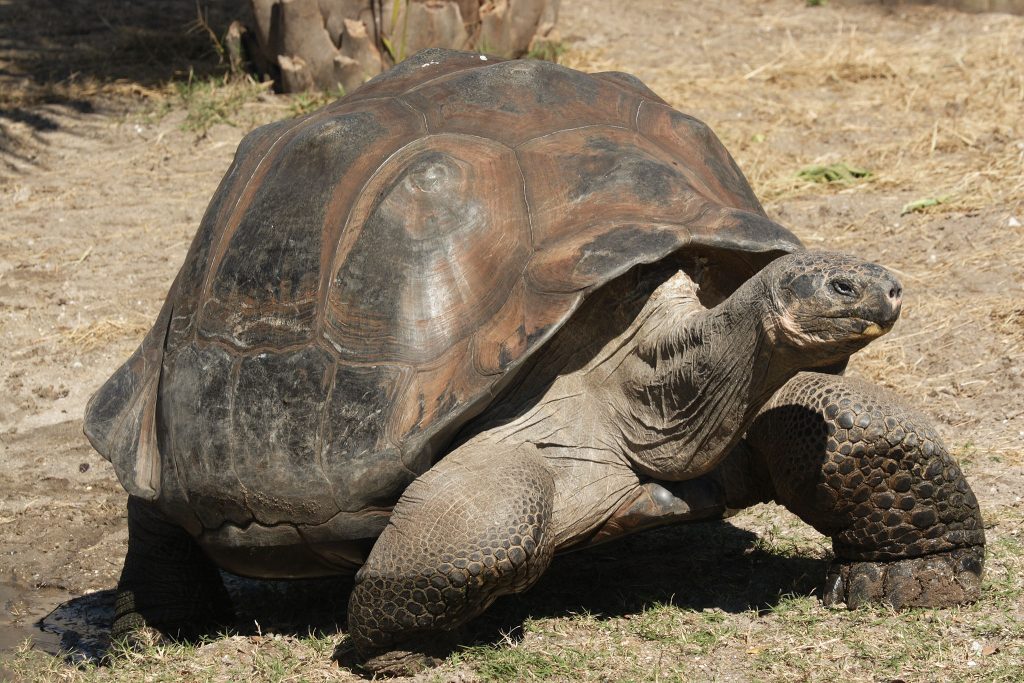
But some animals have a risk of death that doesn’t change depending on how old they are. Some animals, from Galápagos tortoises, to certain kinds of fish and salamander, have a risk of death that’s flat with time. There’s even a mammal whose mortality rate stays constant throughout its life—the naked mole-rat, which is as beautiful as its name suggests.
Even better, these creatures don’t just struggle on, becoming increasingly frail and diseased, while their risk of death stubbornly refuses to rise—they stay active, mentally sharp and at low risk of cancer and more until the very end of their lives.
Ageing is not a law of biology. The question is, can we all be a bit more tortoise, salamander or naked mole-rat, and bottle whatever it is in their biology that helps them stay healthy for almost the whole of their lives?
Real anti-ageing medicine
The phrase ‘anti-ageing’ has a bit of a bad rap, after centuries of elixirs and bizarre procedures and protocols intended to allow us to defy death. But modern science has now uncovered dozens of ways to slow, and perhaps even reverse some aspects of the ageing process, in the lab at least. Some of these medicines are already beginning human trials.
The Interventions Testing Program, a collaboration between three labs dedicated to performing the most rigorous lifespan experiments in mice, has identified 13 individual drugs and two combinations that make mice live longer.
Scientists have also identified ‘hallmarks’ of the ageing process—biological processes which, when slowed, help animals stay healthier for longer. Some of these hallmarks are already being targeted by medicines, such as ‘senolytic’ drugs that kill aged, senescent cells. There are now more than 20 companies trying to turn this idea from something that works in the lab to treatments that work in people.
More science, more healthspan
The goal of these treatments is to extend ‘healthspan’—the amount of time we can enjoy free from disease and disability. This wouldn’t just have a huge human benefit—more time to play with your grandkids, enjoy your hobbies, travel, volunteer and more—but large benefits for the economy too.
One study calculated that slowing ageing by a single year, meaning people stayed healthy and disease-free for twelve additional months, would be worth a staggering $38 trillion to the US economy.
However, funding of longevity science is nowhere near commensurate with its potential benefits: public funding of ageing research in the US is just under $400m a year, or $1.30 per American. There’s a common perception that Silicon Valley billionaires are making up the shortfall, but the total contribution of the ultra-wealthy to longevity science ever is probably only a little more than is spent on cancer research every year—even though most cancer is caused by the ageing process.
We at The Longevity Initiative believe this is a huge missed opportunity, and we want to generate new policies, create educational resources and campaign to change it.
The consequences of longevity science
Longer, healthier lives will lead to lots of questions too—how we will ensure equal access to these treatments, what more healthy people will mean for our environmental impact on the planet, and how we’ll manage our lives, societies, pension systems and more.
We’re planning lots more articles in the Longevity Library to get to grips with these issues. For now, you might enjoy this one on whether the first longevity medicines will only be available to the rich.
If you’d like to see more of these articles, and to help us campaign for longevity science, we’d be delighted if you would consider donating to The Longevity Initiative, or just signing up for our newsletter so you’re the first to know what’s happening in longevity science.